

Blog
July 8, 2026
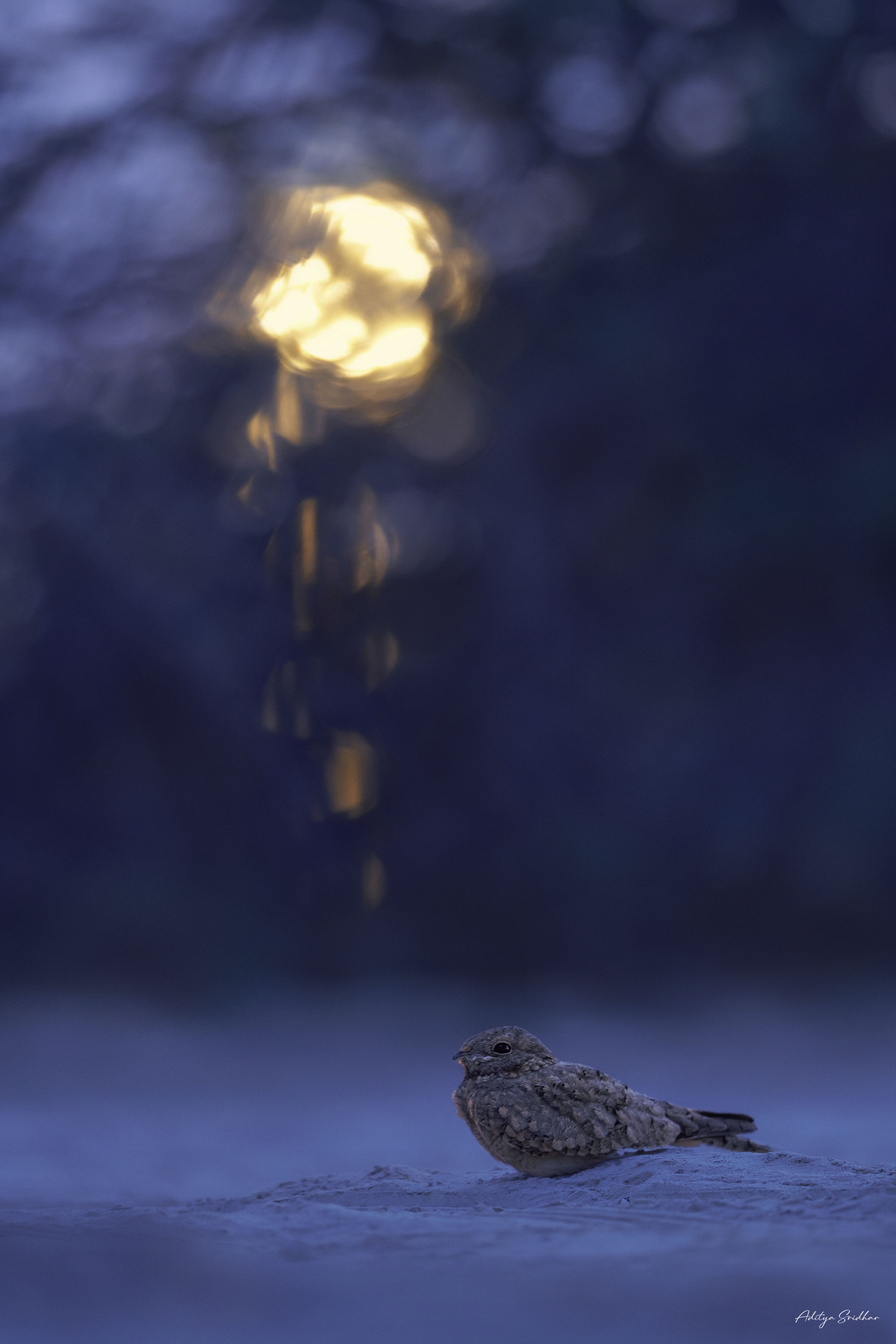
Egyptian Nightjars are most often seen during the day as they rest in arid patches of land surrounded by dry shrubs and acacia. As the sun goes down and the mercury drops, however, they leave their roost sites and slip into the darkness in pursuit of prey.
I’ve always wanted to photograph these nightjars while they’re most active – in the dead of night – without the use of any artificial light source.
A few years ago, I stumbled upon one of their roost sites by complete accident. When the nightjars appeared in my headlights, I scrambled for my camera and laid down in the cold, coarse sand, praying that they’d be tolerant of my presence. What followed was the stuff of dreams.
One of the birds landed directly in front of my lens, faintly illuminated by a distant streetlight. It was a technical challenge – the dynamic range of the scene was extremely high, and I had to rely on manual focus. For context, I couldn’t even see the nightjar with my bare eyes. Thankfully, with a lot of trial and error, I managed to get exactly one sharp shot in a sequence of 200 images.